





Poland gives a private label skincare manufacturer EU compliance without German pricing, and the plants sit close enough to Central European warehouses for short replenishment. I have watched buyers lose weeks on two things here, a Polish address that belongs to a broker while the filling happens abroad, and a certificate nobody at the plant can produce. The seven below run their own plants, which is why I recommend them for a first brief.
Quick Comparison Table
| Manufacturer Name | Country-Region | Core Strengths | Key Certifications |
|---|---|---|---|
| Delia Cosmetics | Rzgów, Łódź region | Full face-care ladder, own retail brands, ECOCERT COSMOS range | ISO 9001; ISO 22716; ISO 13485 |
| Your Private Label (ŚWIT Group) | Warsaw and Halinów | Own packaging plant, eight-SKU hyaluronic routine, refill formats | GMP; ISO 22716; ISO 9001 |
| Floslek | Piaseczno, Warsaw region | Dermatological positioning, deep proprietary formula bank | ISO 9001; ISO 22716; ISO 13485 |
| Popławska Group | Wilczyce, Wrocław region | In-house testing and CPNP filing, alginate and device formats | ISO 22716 (GMP) |
| NISHA Manufacturing | Puszczykowo, Poznań region | Deep ingredient library, PhD-led development | ISO 22716 (GMP) |
| Clover Cosmetics | Katowice, Silesia | High natural-origin content, in-house safety assessor | ISO 22716 (GMP) |
| SALVENA | Skawina, Kraków region | Cosmetics, devices and liquid supplements on one site | ISO 22716; ISO 22000; ISO 13485 |
1. Delia Cosmetics
Two plants and 40 million units a year is the kind of number that settles a shortlist early, and Delia Cosmetics states both on its own site rather than saving them for a sales call. The Rzgów house runs more than 20 face SKUs, from a triple hyaluronic cream to an acid tonic and an eye cream, which lets a brand assemble a whole routine in one purchase order. That breadth is why I place it first among private label skincare manufacturers in this market.
Factory Profile
- Over 26 years of trading and a workforce above 390, with distribution reaching 70 countries.
- Its own Delia and Cameleo brands come off the same lines, which means a base has already been sold at retail before a client sees it.
- An ECOCERT COSMOS certified range runs beside the mainstream face line, and a natural brief stays in the same building.
Core Competencies
- One team produces the audit documentation for every category, which spares a reviewer the usual scavenger hunt.
- Colour cosmetics and hair care run under the same roof, and a face line can later grow into colour or hair without a second supplier.
2. Your Private Label (ŚWIT Group)
ŚWIT Group moulds its own jars at Morąg and fills at Halinów, a pairing few private label skincare manufacturers can offer because most buy packaging in and bill the markup back. That is why I do not treat a refill pouch programme as a special request. The group has been making cosmetics since 1944, and that length of run shows in the paperwork it hands over.
Factory Profile
- Tested recipes number more than 300, enough for a brief to reach pilot batch without a from-scratch development cycle.
- Refill doypacks from 400 to 1,500 ml are filled in-house, covering the body and hair formats European retailers now push.
- CPSR paperwork, FDA checks and SGS audits are handled by the same team that runs the line, not outsourced.
Core Competencies
- An eight-SKU hyaluronic routine covers an anti-ageing facial oil, an eye serum, a day cream and a night moisturiser, and the case for that actives class is well documented in evidence that topical hyaluronic acid improves skin quality and visible signs of ageing.
- Because nothing is outsourced, a packaging change does not reopen a supplier qualification, a step that usually costs three months.
3. Floslek
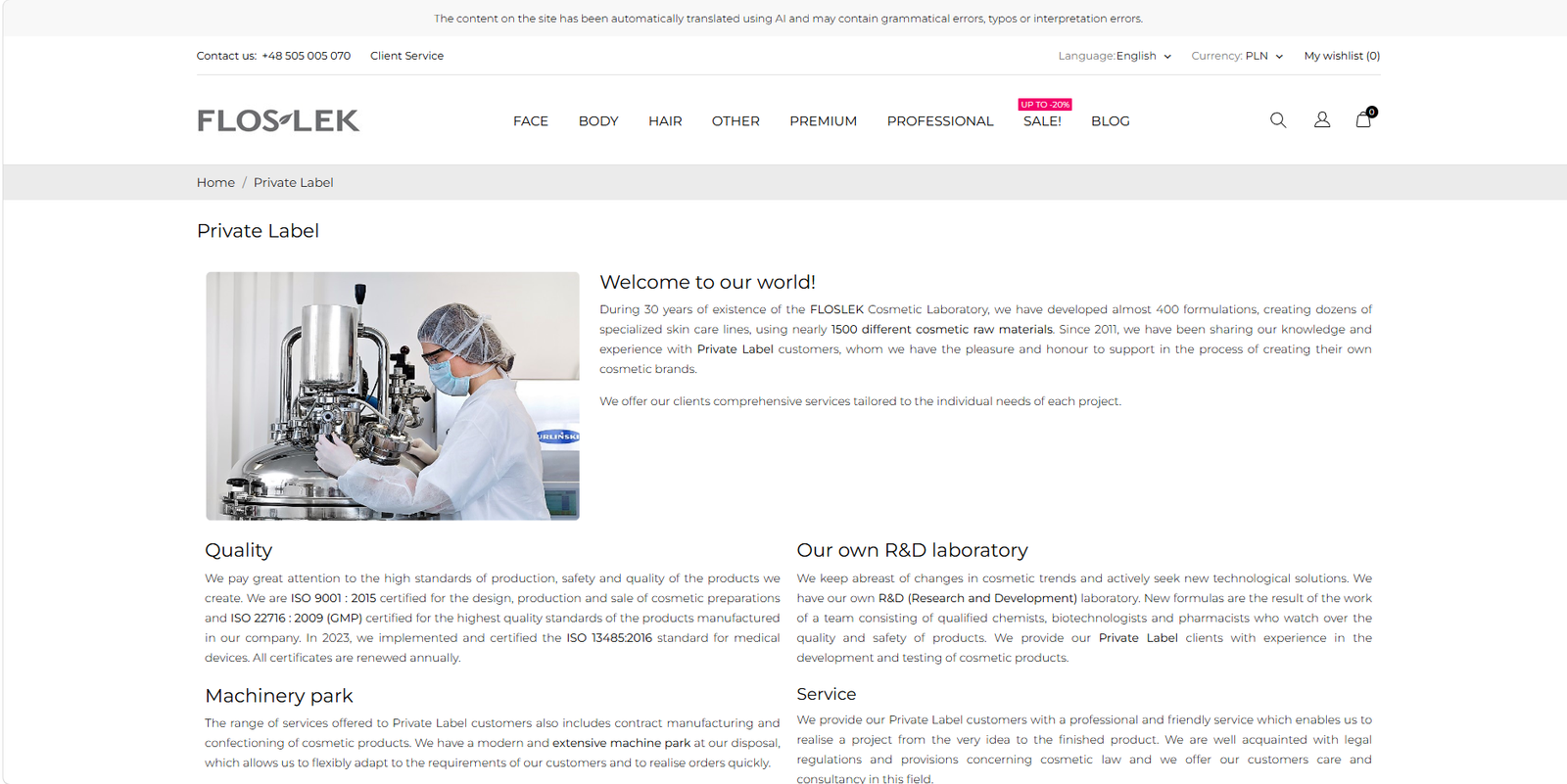
Pharmacy counters, not department stores, built Floslek, and the private label arm opened in 2011 has since signed more than 50 domestic and international labels. Floslek holds over 700 proprietary formulations and 1,500 raw materials in-house, and a brief does not wait on someone else’s catalogue. That pharmacy grounding is why I rank it as a private label skincare manufacturer worth a first call when the brief has to survive a pharmacist’s questions.
Factory Profile
- A dermocosmetic range built around sensitive skin, capillaries and acne sits behind the private label offer.
- SPF-rated face products, including a CC cream with SPF 20, are formulated and filled on site.
- Both the plant and an in-house R&D laboratory sit in Piaseczno, just outside Warsaw.
Core Competencies
- Cream is the core dosage form here, so a brief starts from a base that has already passed stability, which is the same starting point the face cream manufacturers on my other shortlist work from.
- Peeling and gommage formats are produced in-house, so a resurfacing step can ship with the same order.
4. Popławska Group
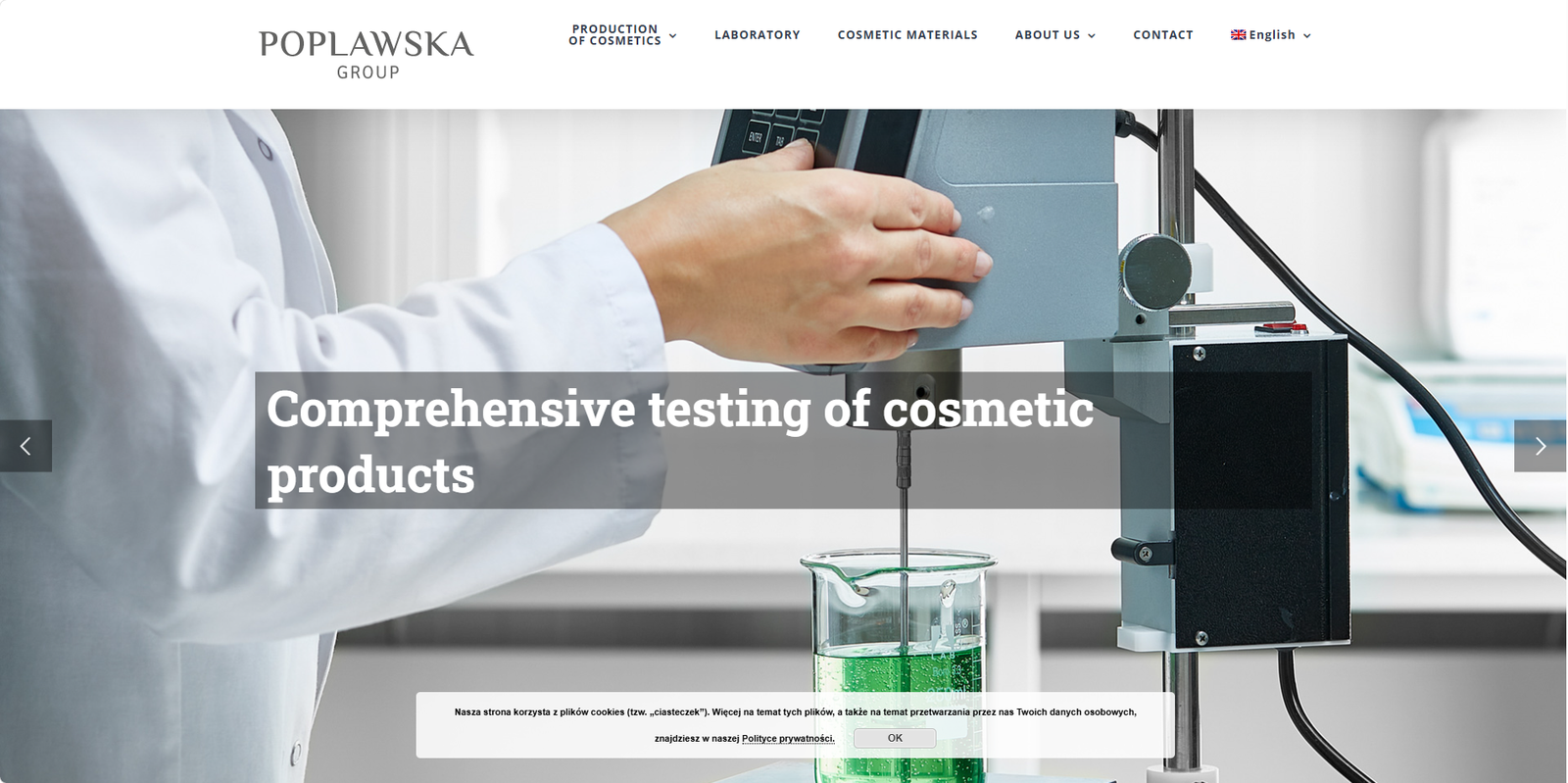
A skincare brief usually stalls in testing, not in formulation. Popławska Group answers that with a laboratory on the same site, running microbiological testing to PN EN ISO 17516 and handling CPNP registration, CPSR and SPF work in-house, so I do not have to commission three outside vendors. Six hundred ready formulations back the offer, and the line reaches into salon treatment formats, a spread wider than most private label skincare manufacturers bother to keep on file.
Factory Profile
- Up to 1,500 cartons leave the site daily, bound for buyers worldwide.
- Twenty-six alginate mask designs and 13 device formats sit alongside the creams and tubes.
- Wilczyce, west of Wrocław, keeps the plant and the laboratory inside one boundary.
Core Competencies
- Registration paperwork comes from the same people who write the formula, and a claim is never separated from its proof.
- Existing bases shorten the route to a first batch, which matters once a launch date is already public.
5. NISHA Manufacturing
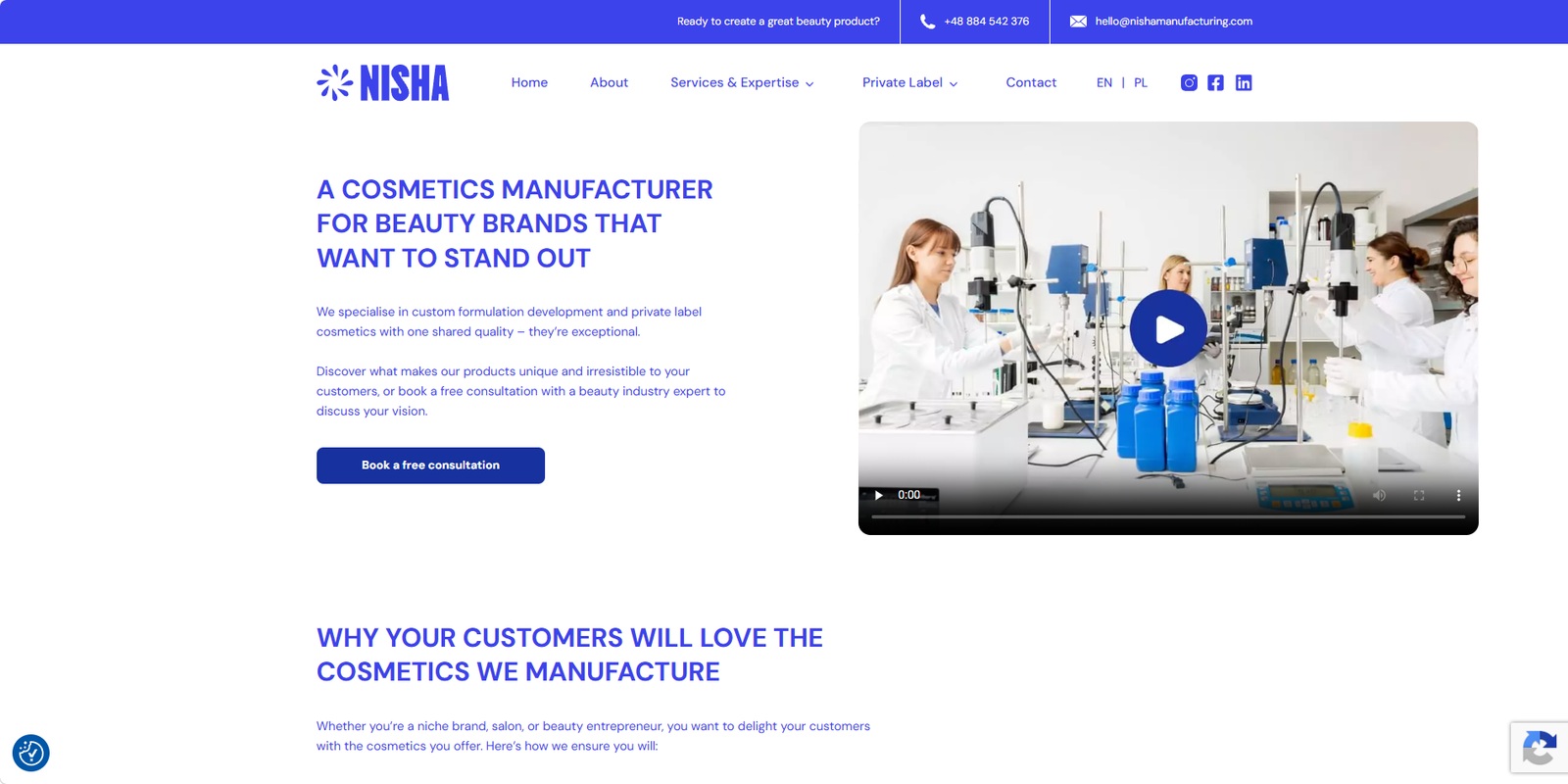
Ten thousand tested raw materials drawn from more than thirty suppliers would be an odd thing for a contract manufacturer to advertise, until you notice the founder also runs a consumer brand. NISHA Manufacturing was set up by Joanna Ryglewicz, the name behind Oio Lab, and development is led by a chemistry PhD, Anna Bobkowska. I read that as a private label skincare manufacturer arguing about the ingredient story before it argues about the jar.
Factory Profile
- Serums, creams, lotions, cleansers, lip balms and face masks are all produced in-house.
- Finished goods ship to the UK, Denmark, the Netherlands and Poland itself.
- An annually audited GMP system governs the Puszczykowo site, about 15 km south of Poznań.
Core Competencies
- That ingredient library gives a formulator room to swap an active without rebuilding the base.
- Ceramides, the class these briefs tend to lean on, sit at the centre of stratum corneum barrier organisation and hydration, and a review of ceramide-stimulating strategies in cosmetic science maps which ingredients actually raise the skin’s own supply.
6. Clover Cosmetics
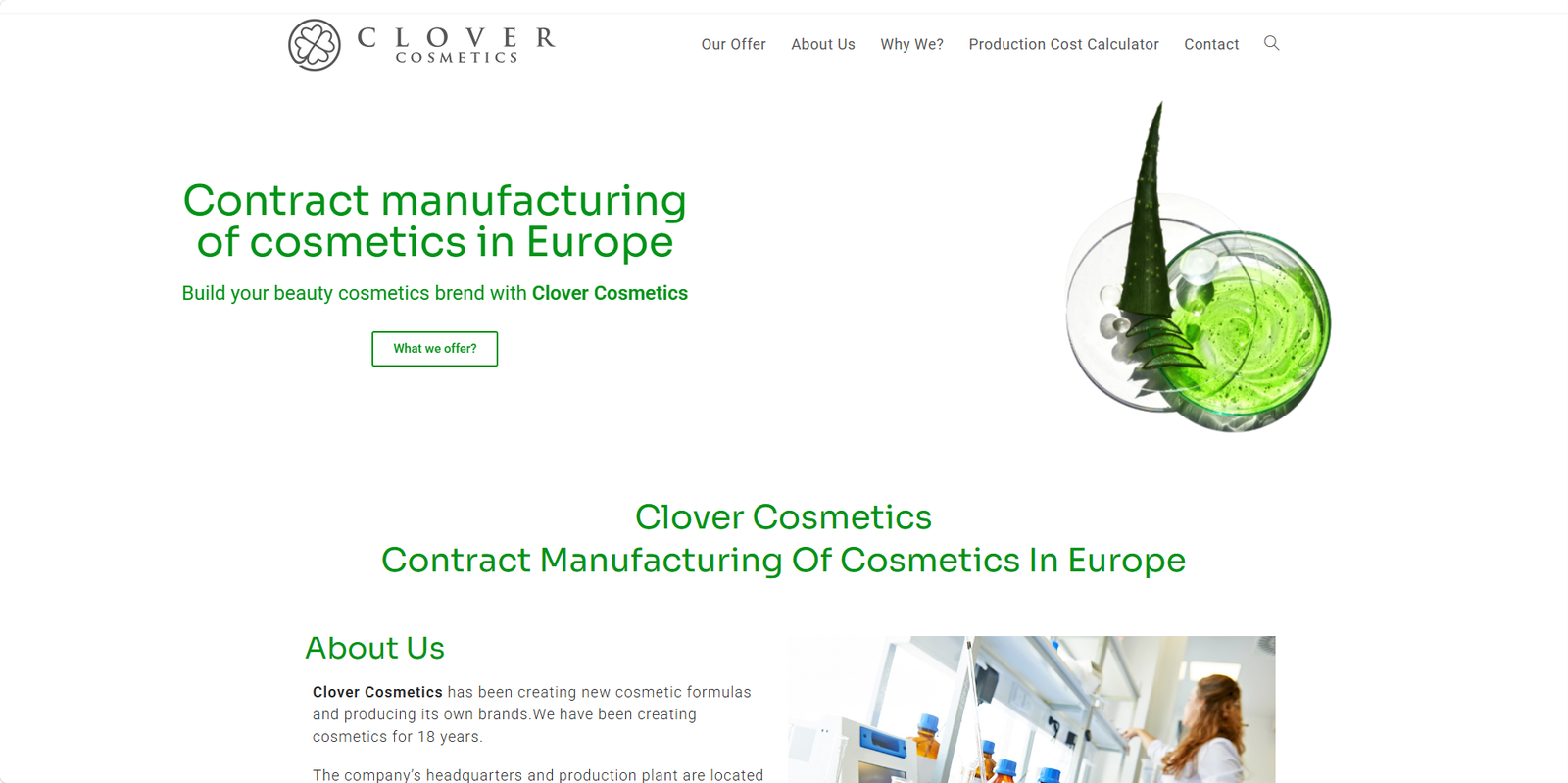
Hitting 96% natural origin in a formula is easy to claim and hard to document. Clover Cosmetics keeps a safety assessor on its own payroll, so the claim is signed off inside the building rather than by an outside consultant, and the house works from more than 200 proven formulations. The pairing is what I look for in a private label skincare manufacturer before I take a clean-positioned brief to production.
Factory Profile
- Gel masks, clay masks and makeup removers sit beside the face and body creams, letting one brief cover several steps.
- Exports already reach Italy, the UK, Germany and Greece.
- The plant in Katowice, Silesia, is the company’s own rather than a shared tolling site.
Core Competencies
- Sampling and pilot batches run before a bulk order, so a texture can still move late in the process.
- Exfoliation formats run beside the face line, and Polish private label body scrub manufacturers cover the body step when a launch needs both halves.
7. SALVENA
One quality system covering three regulated product classes is unusual, and SALVENA built that system into its own Skawina site rather than assembling it from partners. A brand selling an inside-and-out routine gets its tonic, its cream and its supplement from one line of accountability, which removes a hand-off most launches still carry. For a private label skincare manufacturer working to a single launch date, that is worth more than a wider catalogue.
Factory Profile
- Dosage forms span liquids, semi-solids and balms rather than a single texture family.
- Production cycles are short, and the company points to automation as the reason.
- Skawina, west of Kraków, holds a factory rebuilt end to end, not patched up.
Core Competencies
- A cream and a supplement can leave on one shipment, which suits brands selling a combined protocol.
- Device discipline carries into cosmetic briefs, so documentation arrives in a form auditors already accept.
Summary
Documentation decides, not the sample someone photographs for a pitch. What I would do with this list is cut it to two names, ask each for a stability report and a CPSR template, and let the paperwork pick the winner. Testing, registration and packaging are the three hand-offs that delay a launch, and every private label skincare manufacturer above has chosen which of them to keep in-house. Briefs outside face care are still worth a note to our team, because we run that work on our own line and can quote it without passing you on.
