



Private label sunscreen made in Spain can promise SPF 50 on a spec sheet and still fail at the label, because the number only holds if the UVA balance and the in-vivo test behind it survive a reformulation. The traps here are a house that lists filters but cannot name its SPF method, an after-sun or self-tan formula sold into a sunscreen slot, and a cream that separates in a warm warehouse. The six below are the houses I would send a sunscreen brief to.
Quick Comparison Table
| Manufacturer Name | Country-Region | Core Strengths | Key Certifications |
|---|---|---|---|
| Cosmewax | Jerez de la Frontera and Valencia | 11,000 m² across two plants, 7,000 t a year added at Puzol | ISO 22716; ISO 9001; IFS; BRCGS; Ecocert; FDA |
| RNB Cosmetics | Valencia | About 60 launches a year, 40+ patents on UV filter systems | ISO 22716; GMP |
| Valquer | Toledo | Turnkey work on about 90% of projects, sun care as its own line | IFS; ISO 22716; ISO 9001; ISO 14001; Halal |
| Neftis Laboratorios | Barcelona | 7,000 formulas, cleanrooms built for medical devices | ISO 22716; ISO 13485; CE |
| Rofersam | Les Franqueses del Vallès | Eight filling lines, 15 to 70 units a minute | ISO 22716; GMP; Ecocert |
| Laboratorios Magriña | Sant Adrià de Besòs | SPF 6 to 50+, five-volunteer SPF test on every formula | ISO 22716; ISO 9001; Ecocert |
1. Cosmewax
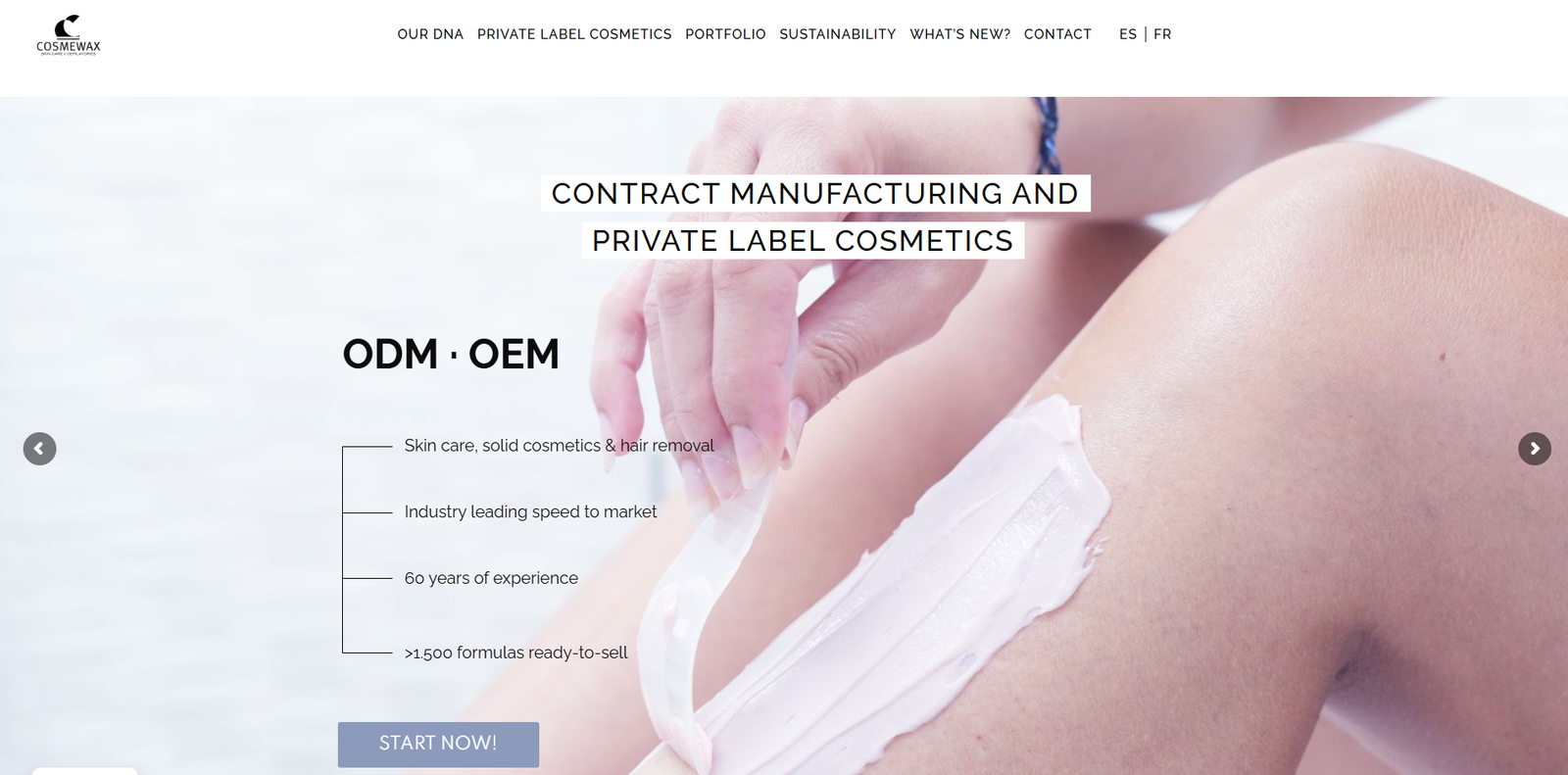
Cosmewax sells sun care the way a supermarket buys it, in oils, creams, lotions and after-sun, and the volume behind those formats is why it opens this list. The Jerez de la Frontera site has run since 1960 and now ships to more than 50 countries, and a second plant at Puzol lets it plan a summer season across two sites rather than one. That is the profile I want behind a private label sunscreen programme before a first brief goes out.
Factory Profile
- Two GMP plants cover more than 11,000 m², and the Puzol site was built for 7,000 tonnes a year.
- Certifications run from ISO 22716 and ISO 9001 to IFS, BRCGS and Ecocert, plus FDA registration for sun care sold into the United States.
- Around 350 people work from a library of 2,000 ready formulas, and 95% of firm orders in 2025 shipped inside the quoted lead time.
Core Competencies
- Sun care runs beside waxes and depilatory creams on the same site, so a summer line and an off-season line come from one supplier.
- The group still sells its own brands at retail, which means a texture reaches a shelf before a client ever sees it.
2. RNB Cosmetics
RNB has worked in solar care out of Valencia since the 1990s, and its output is paced for retail programmes rather than one-off projects, so a pharmacy chain can refresh a sun line every season without changing supplier. A survey of UV filters used in commercial sunscreens puts avobenzone in 56% of adult products with the triazine filters close behind, and matching that palette is the first thing I ask on a private label sunscreen brief.

Factory Profile
- More than 500 staff support a portfolio above 500 products sold internationally, with the company trading since 1989.
- About 60 launches a year across facial, body and solar care.
- More than 40 patents, with photoprotection and UV filter systems among the recurring subjects.
Core Competencies
- Formulas are written for high-volume retail, so texture is signed off against cost and shelf life before a brief is accepted.
- Facial, body and sun lines share one development team, which keeps an SPF claim consistent across a range.
3. Valquer
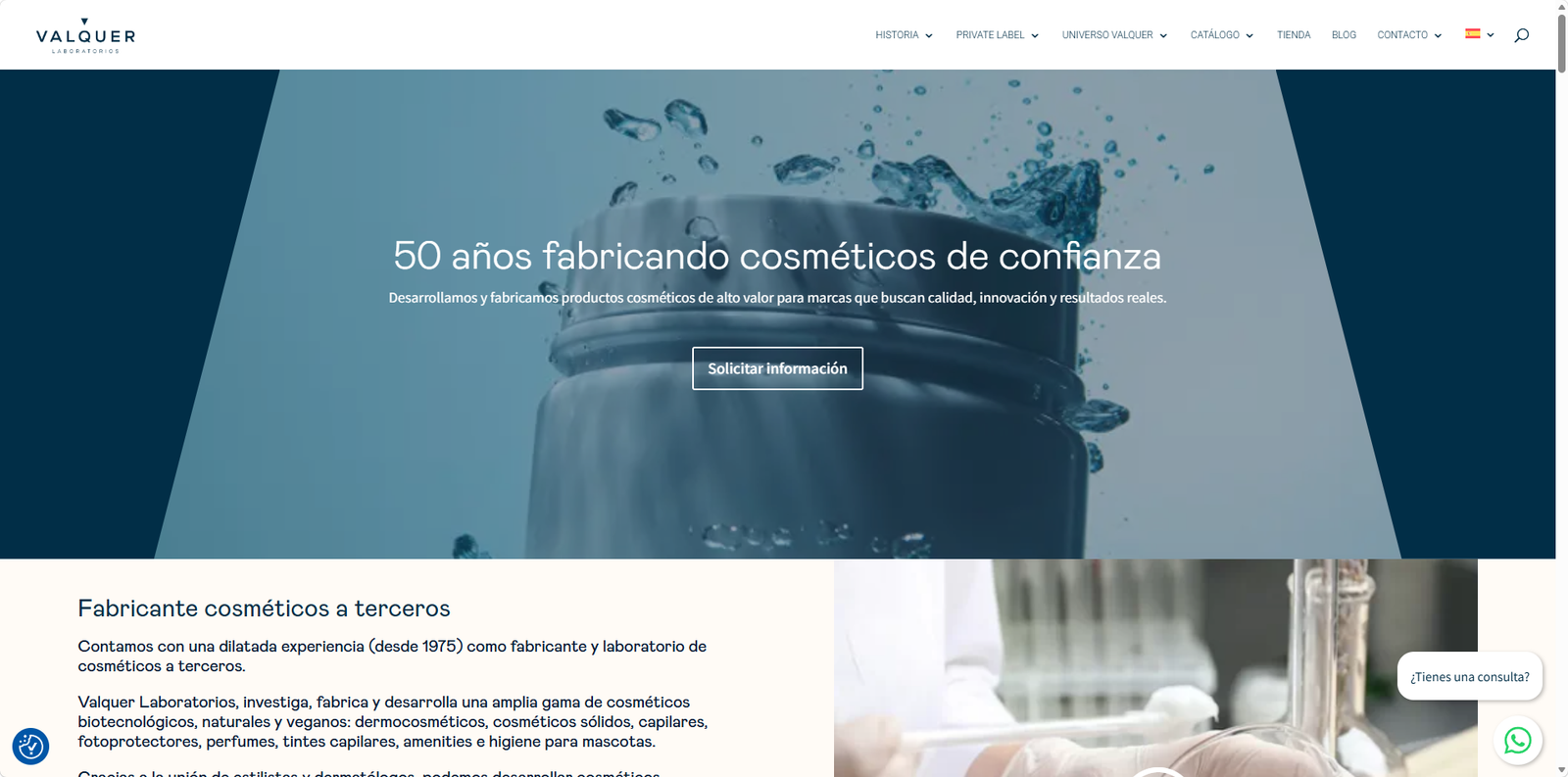
Valquer has mixed formulas since 1975 and runs sun care out of a Toledo plant that also turns out solid shampoo bars and hair dye. That mix matters when a brand wants one supplier across a summer launch and the rest of the year. Around nine in ten of its projects are handled turnkey, packaging included, which is why I rank it ahead of larger houses for a first run. A brand selling into Australia has a second regime to satisfy, and the private label sunscreen manufacturers there work from a different filter list entirely.
Factory Profile
- Sales offices in the United Kingdom and Mexico sit behind the Villaminaya plant near Toledo.
- Certifications cover IFS, ISO 22716, ISO 9001, ISO 14001, Halal and EcoVadis.
- More than 600 registered formulas, with sun care kept as its own line rather than a side project.
Core Competencies
- Packaging, filling and regulatory files stay with one team, so a first run does not need a translator between suppliers.
- A solid cosmetics line gives a brand a plastic-free SKU beside the sunscreen without a second development cycle.
4. Neftis Laboratorios
The cleanrooms at Neftis were built for medical devices, and that is what sets its sun line apart from a standard cosmetics range. The Barcelona plant works from a library of 7,000 formulas, and on a private label sunscreen brief the ISO 13485 certificate beside ISO 22716 means a sun product can cross into pharmacy without a second plant, which is why I keep it on this list.
Factory Profile
- Cleanroom production runs from a 6,000 m² facility at Santa Eulàlia de Ronçana, in operation since 2005.
- It can make CE-marked class I to III devices on the same site, so a sun cream is not the only regulated output.
- Around 3,000 finished references are on file, with about 15 new products added each year.
Core Competencies
- Solar protection sits inside a range that also covers anti-pollution and depigmenting work, so an SPF claim can carry a treatment story.
- Sterile single-dose filling is done in house, which suits monodose or ampoule sun formats.
5. Rofersam
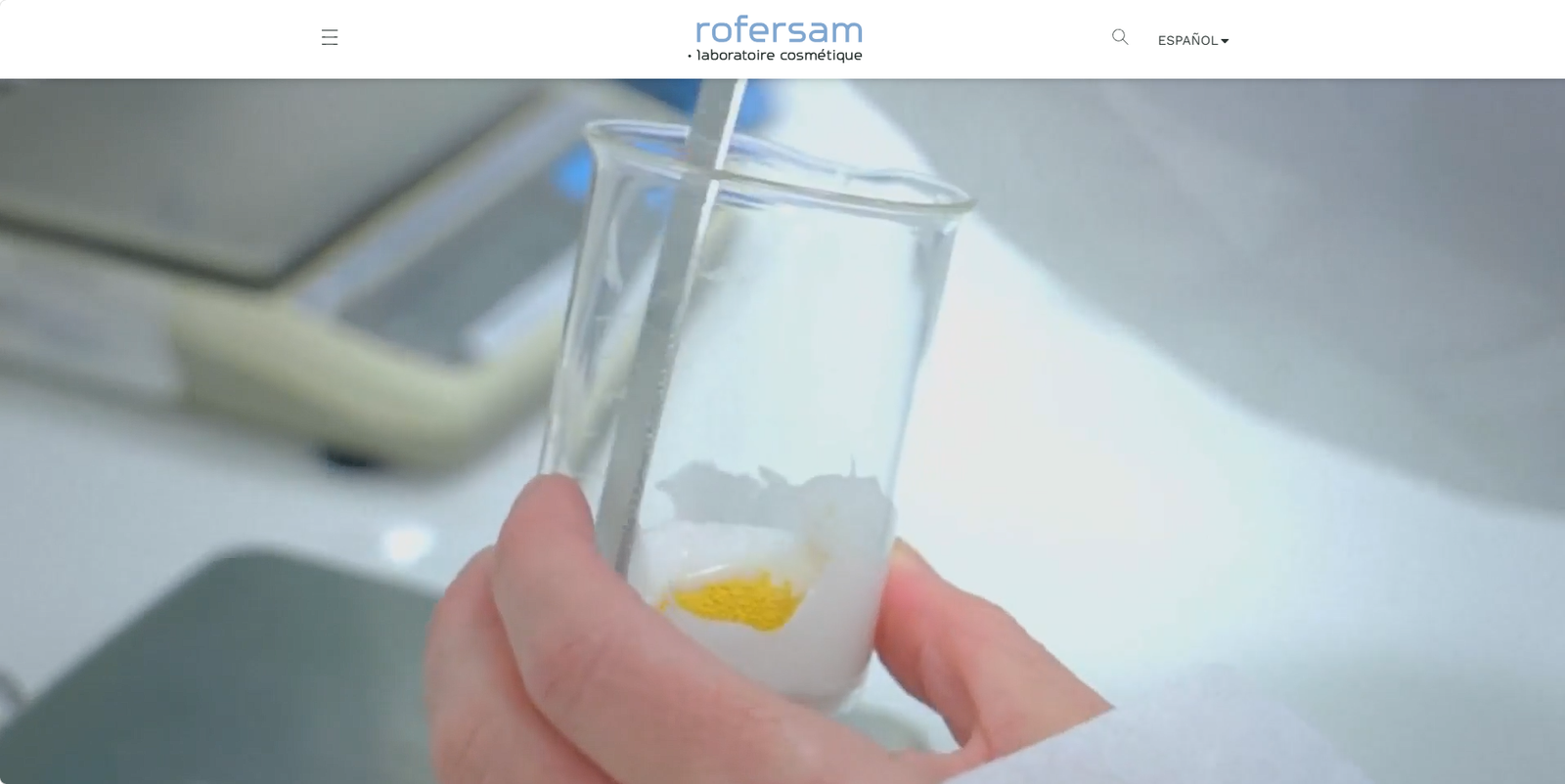
Rofersam started in 1979 in a 3,000 m² plant at Les Franqueses del Vallès and has since put a 5,000 m² warehouse behind it. What I look at first is the filling floor, eight lines running from 50 g tubes to sachets at 15 to 70 units a minute, because the format a brand picks decides how much product actually reaches skin, and a study of SPF moisturisers found users missing 16.6% of the face against 11.1% with a dedicated sunscreen. A private label sunscreen line with that spread can move into travel sizes without a second tooling bill.
Factory Profile
- Still family run, with factory, warehouse and filling floor on one plot outside Barcelona.
- Output doubled to two million units after the warehouse came on, with room for a second shift.
- Tubes, vials, sachets and multi-format jars all run in house, with secondary packing on seven further lines.
Core Competencies
- Ecocert came in 2007, among the first Spanish labs to hold it, so a natural sun claim has a paper trail behind it.
- Sun care, after-sun and self-tan sit in one portfolio, which keeps a summer range colour-matched across formats, and the private label after sun manufacturers I compared earlier usually match the rest of the range to the sunscreen.
6. Laboratorios Magriña
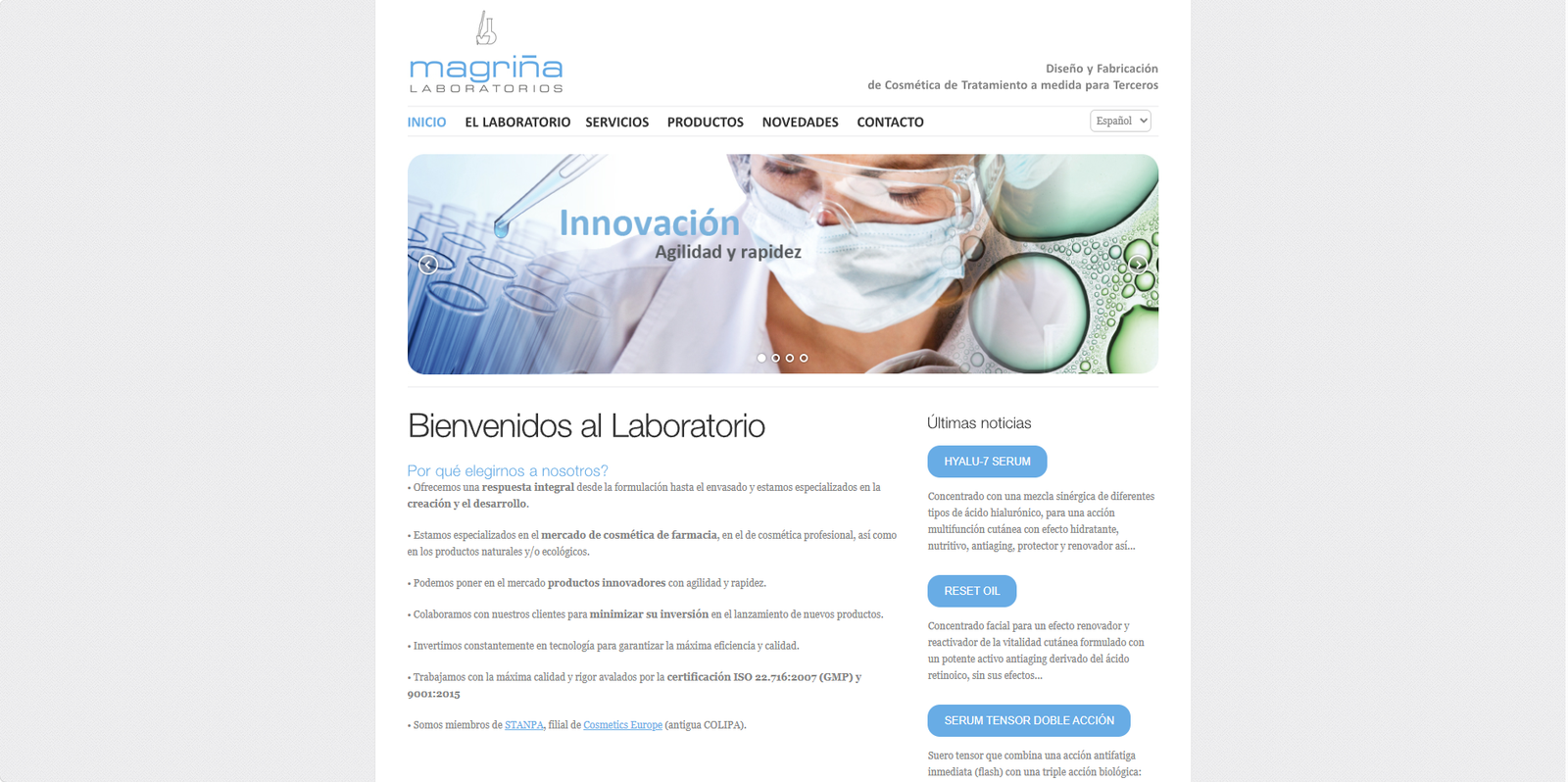
Laboratorios Magriña publishes its sun range the way a lab should, with a table from SPF 6 up to 50+ and the test behind each entry. It runs a five-volunteer SPF test, a tolerance patch test and a critical wavelength calculation behind every formula, which is more than a label needs and exactly what a pharmacy buyer asks for. That is what makes it a private label sunscreen partner I would defend in front of a pharmacy buyer.
Factory Profile
- Pharmacy counters have been the client base since 1972, from Sant Adrià de Besòs near Barcelona.
- ISO 22716 and ISO 9001 certified, with an Ecocert licence for natural formulas.
- Cream, fluid, spray and oil textures all sit in the range, with after-sun and self-tan alongside.
Core Competencies
- Every entry in that table can be handed over with its test report, so a retailer’s technical team sees evidence rather than a claim.
- A brown algae lipid complex anchors the range as an antioxidant, which gives a brand a story beyond the number.
Summary
Read a sunscreen spec sheet and the SPF number is the last thing that decides anything. What decides is whether the UVA balance was measured, whether the filling line can hold a texture through a warm summer, and whether the paperwork survives a pharmacy audit. Private label sunscreen buying comes down to which of those three a house will prove on paper, and the profiles above say which one each picked. I would ask for all three before a first order, and if your brief sits outside cream and spray formats, our team can point you to the line that runs it.
