




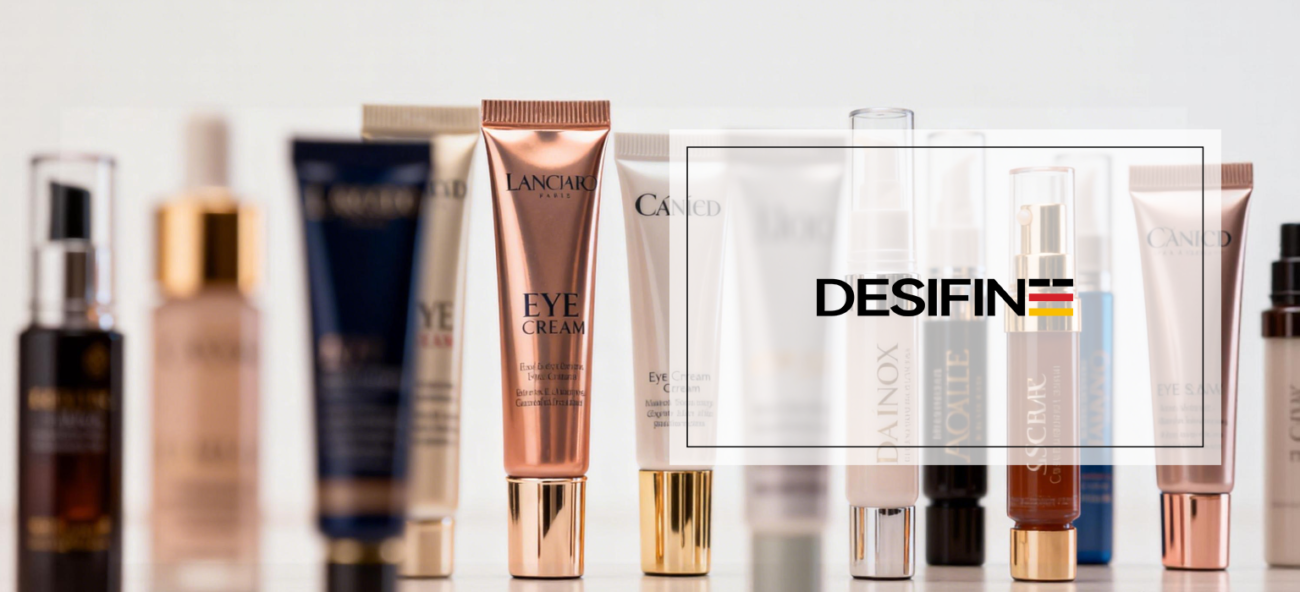
If you are ready to enter the eye cream sector through the private label model, mastering an effective set of methods to create hit Private Label Eye Cream products will put you halfway to success.
The global eye cream market is expanding rapidly, with a market size of approximately $5.4 billion in 2025. It is expected to grow to $10.5 billion by 2035, representing a compound annual growth rate of 7.3%. At the same time, the online eye care market exceeded $24.17 billion in 2025.
It is worth noting that small and medium-sized brands with annual revenue of less than $100 million have achieved a robust growth rate of 22.3%, far surpassing the 6.1% growth rate of brands under major groups. This has opened an unprecedented market window for the rise of Private Label Eye Cream brands.
The following five winning strategies will help you quickly secure a market position and achieve sustained growth in the highly competitive eye care industry.
Quick Overview
| Strategies | Core Points | Key Actions | Expected Results |
| Target Differentiated Niche Markets | Upgrade from “mass-market products” to “targeted solutions” | Segment vertically by function, scenario and crowd, and focus through streamlining. | Strong product memorability and high traffic conversion rate |
| In-depth Refinement of Ingredient Matrix | Upgrade from “ingredient enthusiasts” to “scientific efficacy advocates” | Full-channel anti-aging formula, transparent concentration, validated transdermal technology | High efficacy credibility and excellent user retention |
| Ultimate Skin Feel Barrier | Lock repeat purchases with an “unboxing surprise” | Initial silky texture, ritual-inspired packaging, and long-lasting comfortable skin feel | Repurchase rate increased by 40%–60% |
| Innovative Form & Scenario Integration | Seize the social incremental space of Generation Z | Content-driven packaging, innovative formulations, portable design | Built-in viral traffic, rapid market breakout |
| Shift from one-time transactions to long-term customer retention | Build ecosystem locking through systematic product planning | Graded product matrix, subscription model, category proliferation | Dual improvement of unit price and LTV |
1.Target Differentiated Niche Markets
Many new private label eye cream brands easily fall into the trap of “trying to cover every benefit a little bit”, resulting in products with no distinctive selling points at all. Today’s consumers are very clear about what skin concerns they want to address. As long as your eye cream delivers ultimate performance on one segmented pain point, it will naturally attract buyers.
Function-driven streamlining creates stronger appeal
- Vertically segment product lines by core pain points: For 30-year-olds with puffy eyes from late nights: “instant de-puffing + anti-blue light”
- Mature skin focuses on “static wrinkle plumping + firming and lifting”
- Young skin targets “hydration & early anti-aging + metabolic stage care”
- This all-dimensional functional adaptation is more likely to win loyal users than “one-size-fits-all universal products with mediocre performance across all benefits”
Expanding consumption scenarios unlocks growth potential
- Beyond “morning and night use only”, develop “scenario-exclusive products” for high-frequency needs such as late-night emergency care, makeup priming prep, business travel, and seasonal sensitive skin relief
- Examples: late-night emergency eye cream, de-puffing eye stick for makeup priming, travel-friendly single-dose eye essence
More precise audience targeting drives higher traffic conversion
- Age-based segmentation: 20+ preventive care, 30+ repair-focused, 40+ firming & anti-aging
- Niche audiences: men’s eye care, pregnancy-safe formulas, budget-friendly student options, post-aesthetic procedure repair eye products
- Once high-repurchase user groups are identified, brands can achieve targeted marketing and sales scale breakthroughs.
2.In-depth Refinement of Ingredient Matrix
Skincare trends in 2026 have already evolved from “checking ingredient names” to “evaluating ingredient concentrations, transdermal delivery technology, and efficacy validation data”. Simply stacking ingredients only grabs temporary attention. What truly retains users is whether your private label eye cream has solid scientific validation.
Full-path anti-aging formulas have become the industry standard
- The market share of products with only “single-target” efficacy is continuing to decline
- Formulas with multi-effect mechanisms of “collagen boosting + antioxidant protection + barrier repair” have surged to a 72% market share in 2025
- The golden combination of “Caffeine (circulation boosting & de-puffing) + Peptides (anti-wrinkle & firming) + Panthenol (barrier repair)” is the most popular framework for creating all-round eye creams
Prioritize ingredient concentration over marketing gimmicks
- Bestselling eye creams are usually highly transparent in ingredient labeling
- Pro-Xylane concentration reaches 3.5%, Acetyl Hexapeptide-8 content at 0.45%, and Acetyl Tetrapeptide-5 content at 0.50%
- Compound with high-purity Caffeine and pharmaceutical-grade Niacinamide
- Consumers will compare ingredient lists with third-party HPLC test reports word by word
Transdermal delivery technology is the true competitive moat
- Consumers are increasingly concerned about whether ingredients “are actually absorbed” rather than just “applied to the surface”
- Transdermal data provided by delivery technologies such as liposomes, nanocarriers, and supramolecular assembly is far more convincing than telling a beautiful ingredient story
- You can request manufacturers to provide in vitro transdermal penetration test data as a product selection basis
Patented technology and efficacy endorsements are the core competitive barriers
- Leading private label factories have self-developed exclusive patented technology portfolios
- Supported by authoritative third-party human efficacy tests and in vitro transdermal reports
- Patented formulas with verification standards above the market average have become the most powerful proof of R&D strength and product differentiation barriers
3.Ultimate Skin Feel Barrier
For consumers, the skin around the eyes is the thinnest on the human body. It is more fragile and sensitive than facial skin, with extremely high demands on sensory experiences including texture, consistency, and fragrance. Studies show that simply optimizing formula comfort and packaging refinement can boost a brand’s repurchase rate by 40%–60%. Only an outstanding pleasant initial application experience can drive sustained repeat purchases.
First impressions are shaped by initial experience
- Under 4K high-definition real shots on social media, the moment the eye cream is applied determines user feedback. Whether the texture is silky or sticky, absorption is fast or slow, and post-application feel is fresh or greasy, directly influences consumers’ willingness to leave positive reviews
- It is recommended to request sensory blind test data from manufacturers or conduct product trials in person
Ritualistic design defines premium quality
- A premium ceramic massage wand
- A bottle cap with satisfying damping feedback for opening and closing
- An exclusive niche salon-grade fragrance
- Detail-oriented “self-pampering” experiences instantly elevate your product above ordinary jarred eye creams, securing a firm foothold in the high-end price range
Long-term skin feel builds daily user stickiness
- Non-comedogenic in summer and non-drying in winter
- Ultra-lightweight, non-sticky and film-free texture suitable for repeated application throughout the day
- Far more effective than exaggerated marketing narratives in cultivating long-term user loyalty and high repurchase rates
4.Innovative Form & Scenario Integration
Eye creams have always been a category with strong efficacy but high barriers to social sharing. However, the entry of Gen Z consumers is transforming eye care from a mundane “basic home routine” into a visualized, social “emotional item and specific scene experience”. A private label eye cream with strong visual aesthetics or “photo-worthy appeal” has great potential to become the next viral internet hit.
Packaging design is the best free traffic
- In 2026, a private label cosmetic brand must be “content-ready” straight from the production line
- Can the bottle design stop viewers for the first 3 seconds in unboxing short videos?
- Is the packaging format portable single-dose ampoules or pocket-sized mini versions?
- These detail-oriented designs with built-in traffic genes determine whether the product can outperform competitors in algorithm-driven distribution
Innovative textures and formulations are natural viral marketing materials
- “Roll-on massage applicator + ice-cold touch”
- “Silky light emulsion penetration texture”
- These are all “soft selling tools” in the niche category that are most likely to drive massive sharing and repeat purchases
Fast-paced scenarios drive new formulations
- As eye care deeply integrates into multi-scenario mobile lifestyles such as commuting, traveling, office use, and gym sessions
- Leak-proof single-dose capsules
- Individually packaged eye masks
- Portable pen-shaped roll-ons that can be applied anytime, anywhere
- These are becoming the most favorable channels for private label brands to achieve differentiated breakthroughs
5.Shift from one-time transactions to long-term customer retention
Many private label eye cream brands simply launch a single product and stop there once it sells out. This is a fundamentally wrong approach. For an eye cream brand to thrive over a multi-year business cycle, it must build a scientific product system to foster long-term usage habits and dependency among consumers.
Tiered product matrix to cultivate lifelong skincare habits
- Design tiered products for customer groups at different age and budget levels
- Develop cost-effective entry-level firming products focused on “converting new users and retaining them”
- Recommend premium, intensive repair products for loyal, repeat-purchase customers
- Combine with flexible repurchase plans and bundled sets to drive both average order value and customer lifetime value
Healthy repurchase “replenishment logic”
- Change consumers’ shopping habits through monthly subscription plans (widely popular in e-commerce) or packaging with replaceable refills
- Consumers no longer passively check and repurchase when products run out, but become accustomed to “auto-replenishment when nearly empty”
- Subscription models significantly improve a brand’s cash flow predictability and inventory turnover efficiency
Leverage a hero product to drive category expansion
- Break into the market with a high-performing hero eye cream
- Seize the opportunity to promote complementary synergy products in the serum and face cream categories
- Use the eye cream’s “traffic-driving attribute” to boost the brand’s overall average order value
- Examples: Offer an 80% discount on serums with eye cream purchases, or launch an “Eye + Face Anti-Aging Hero Set”
Summary
Overall, as the eye care market evolves from generic “one-size-fits-all” products to a new era of refined operations focused on targeted efficacy, scientifically validated formulas, and pleasant sensory experiences, mastering a private label eye cream blockbuster formula covering “segmented positioning, ingredient precision, texture optimization, social content-driven marketing, and long-term customer retention” is the only way for brands to gain a decisive competitive edge in the increasingly saturated global beauty and skincare market.
If you are looking for a manufacturing partner that deeply integrates German management standards and innovative technology, please feel free to contact us. Backed by an R&D team personally led by German Technical Director Dr. Rolf Lentfer, a library of over 10,000 proven formulas, and production facilities certified to GMPC, ISO 22716 and FDA registered standards, we provide your brand with reliable, all-in-one one-stop support from concept to finished product.
