



The global cosmetics market is undergoing a profound paradigm shift in 2026. According to Research and Markets, the global cosmetics market is projected to reach $283.5 billion in 2026, representing a year-on-year growth of 5.8%, and is expected to grow to $350.4 billion by 2030.
However, what deserves more attention than the growth figures is the fundamental shift in growth logic—the industry narrative is comprehensively moving from past “scale expansion” to “value reconstruction.” Consumers are no longer satisfied with “having more,” but are pursuing “better, more precise, and more meaningful” products.
From a global perspective, this article will provide an in-depth analysis of the five core changes in the cosmetics market in 2026.
I. Demand Reconstruction: From “Efficacy First” to “Emotion-Efficacy Double Helix”
In 2026, skincare concepts among global consumers are undergoing a silent revolution. According to Euromonitor International’s global consumer trends report, 66% of consumers are seeking to simplify their lives, while 58% experience moderate to high levels of stress daily, making the emotional function of cosmetics more important than ever.
Sensitive skin has become the “new normal”.
According to the latest research by WGSN, sensitive skin will become the “new normal” in 2026. A study covering 18 countries shows that 71% of consumers report having sensitive skin — a figure that has increased by 55% over the past 20 years. This means cosmetic formulations are shifting from “strong intervention” to “gentle synergy,” and the philosophy of products working with the skin, rather than against it, is becoming mainstream.
The deep connection between skin and emotions
By 2026, the skin will be regarded as the external expression of internal feelings. Consumers are increasingly aware that skin conditions are dynamic and may fluctuate multiple times throughout the day due to internal and external factors. Products that can flexibly adapt to skin needs and emotions are on the rise. For example, Estée Lauder’s Nutricious line features a “nutrigenomics” complex that nourishes and balances “irritable skin.”
Rigid demand for clinical-grade efficacy
Meanwhile, consumers have never relaxed their demands for product efficacy. According to Euromonitor, nearly half of global consumers are willing to pay a 10% premium for clinically proven formulations. This means that “gentle” by no means equals “ineffective”; rather, it refers to achieving a more comfortable experience while ensuring results.
II. Technological Transformation: AI evolves from a “novel tool” to “core infrastructure”
In 2026, artificial intelligence is no longer a peripheral tool, but core infrastructure integrated into every link of the value chain in the cosmetics market.
Deep Integration of AI Across All Segments
According to a survey of CEOs by the Indie Beauty Media Group, 94% of beauty brands are using AI to varying degrees.
From real-time quality control and demand forecasting in smart manufacturing, to skin type matching and virtual try‑on for personalized diagnostics, to content creation and targeted recommendations in generative marketing, AI is redefining the efficiency boundaries of the beauty industry.
The Rise of a New Generation of E‑commerce Engines
Shopify’s launch of “Agentic Storefronts” marks a major shift in how beauty products are discovered—brands can now appear directly within AI chatbots such as ChatGPT and Google Gemini. Nearly half of consumers already use AI to assist with shopping decisions. This means traditional SEO is giving way to Generative Engine Optimization (GEO).
Trust becomes the core asset in the AI era.
NielsenIQ emphasizes that in the AI era, trust must be anchored in visible results, ingredient transparency, and clear product claims. Consumers need to understand how AI-driven processes ensure product quality and safety. Technology must serve to validate product performance, not just enable personalized marketing.
III. Regulatory Restructuring: Accelerated Upgrade of the Global Compliance System
In 2026, the regulatory frameworks of major global cosmetics markets will undergo a series of major adjustments, leading to a significant increase in compliance complexity.
EU: Allergens and PFAS Become Regulatory Focus Points
From July 31, 2026, cosmetics containing the additional 56 allergens but failing to meet the labelling requirements shall not be placed on the EU market. For products containing formaldehyde-releasing preservatives, a warning statement “releases formaldehyde” must be displayed on the packaging if the total formaldehyde concentration exceeds 0.001% (10 ppm).
Regarding PFAS regulation, from October 10, 2026, cosmetics containing more than 25 ppb of PFHxA, its salts, or more than 1000 ppb of PFHxA-related substances shall not be placed on the EU market.
The EU Packaging and Packaging Waste Regulation (PPWR) will also gradually clarify requirements for EPR registration and a unified labeling format in 2026.
US: Continued Implementation of the MoCRA Regulation
The U.S. FDA continues to advance the implementation of the Modernization of Cosmetics Regulation Act of 2022 (MoCRA). The release of the draft rule on fragrance allergen disclosure has been delayed until May 2026. Meanwhile, the FDA is considering adding the sunscreen ingredient bis-ethylhexyloxyphenol methoxyphenyl triazine (Bemotrizinol).
At the state level, starting July 1, 2026, Connecticut will prohibit the manufacture, sale, or distribution of cosmetics containing intentionally added PFAS, unless manufacturers label the products and notify the environmental agency in advance.
China: Pilot Program for “Immediate Review Upon Application” for New Efficacy Cosmetics and Electronic Labels
In 2026, China’s cosmetics regulation will usher in a number of major reforms. The National Medical Products Administration (NMPA) will set up a dedicated review channel for new efficacy cosmetics, implementing “immediate review upon application”, and establish a pre‑registration consultation mechanism. New international cosmetics that meet relevant requirements will be exempted from submitting overseas marketing authorization documents, effectively breaking the “time threshold”.
Starting from February 2026, a pilot program for cosmetics electronic labeling will be launched in six regions: Beijing, Shanghai, Zhejiang, Shandong, Guangdong and Chongqing. Consumers can scan a code to access product information, meeting the needs of elderly-friendly services and different groups of people.
Taiwan, China: Full enforcement of PIF and GMP.
Starting July 1, 2026, all cosmetics must comply with Product Information File (PIF) and GMP requirements, with the exception of solid handmade soap. The Cosmetics Scope and Category Table will also be revised and take effect on the same date, under which “tooth whitening toothpaste” is officially classified as “non-medicated toothpaste”.
IV. Sustainable Transformation: From “Light Green Packaging” to the “Deep Green Revolution”
In 2026, sustainable beauty will no longer be limited to superficial efforts such as “recyclable packaging”, but will enter a “deep green” transformation involving raw material sources, formulation technology, production methods and supply chain systems.
The Rise of Bio-based Ingredients
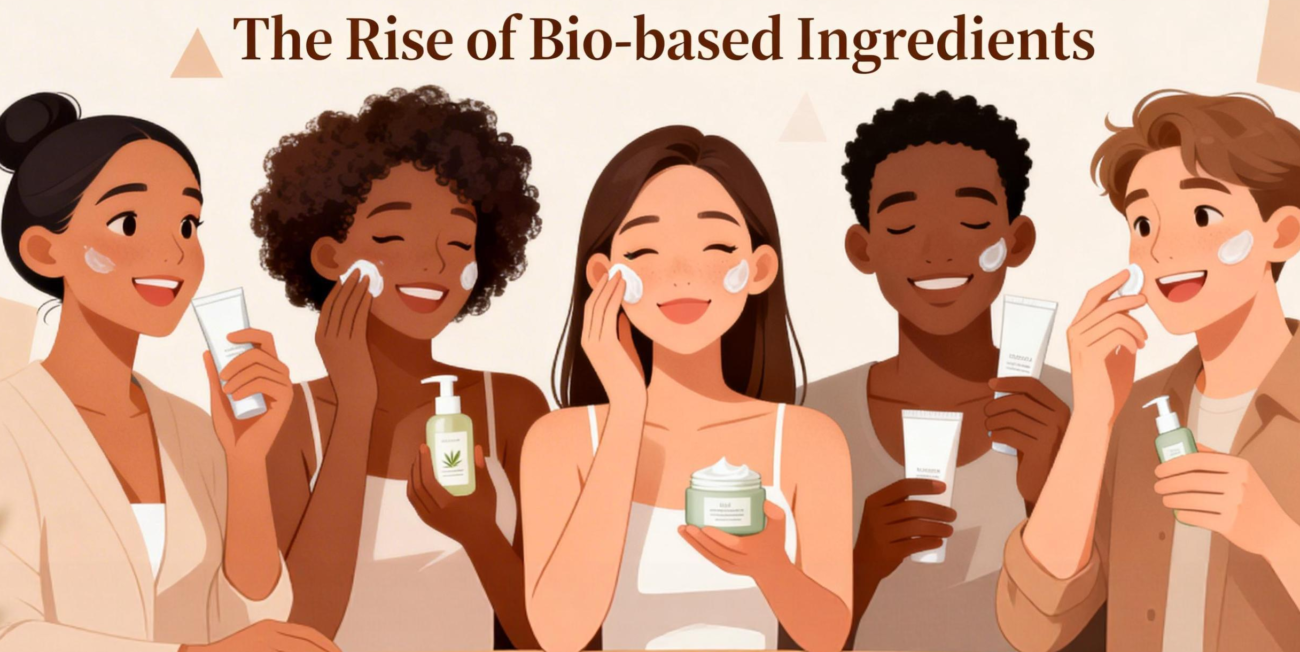
Scientists are extracting highly effective active ingredients from algae, mycelium, and plant cell cultures. Squalane produced via fermentation technology not only eliminates reliance on shark liver but also offers higher purity and stability. Many industry experts predict that algae are becoming an increasingly versatile and important ingredient in the personal care sector.
The Trend of Simplified Formulations
Consumers are moving away from complex, multi-step skincare routines and favoring multi-functional products that deliver a variety of benefits. Formulations are shifting toward one or two core active ingredients, rather than a complicated “kitchen sink” ingredient list. Consumers are more informed about ingredients than ever before; simplified ingredient lists help control costs and prevent supply chain issues.
Disenchantment with the “Clean Beauty” Label
“Clean” as a standalone selling point is losing its luster. A global study found that 64% of consumers believe beauty brands’ “clean” claims are not clear enough. The industry is shifting from vague “clean” to more specific definitions: sustainable raw material sourcing? No microplastics? Compostable packaging?
V. Channel Revolution: Accelerated Integration of Social E‑commerce and Omnichannel
In 2026, the channel landscape of the global cosmetics market is undergoing fundamental restructuring, with social platforms having become the core hub for brands to connect with consumers.
Purchase Decisions Dominated by Social Platforms Like TikTok
According to NielsenIQ data, 22% of consumers have purchased beauty products directly on TikTok, and 37% of live shopping viewers use the format to discover new brands. Social commerce is turning trends into transactions at an unprecedented speed.
Accelerated Integration of Online and Offline Channels
Although online channels are growing at a faster rate, offline channels still dominate. Brands are building omnichannel consumer experiences by driving traffic online and offering experiences offline. Luxury brands such as Dior have launched the Dior Bamboo Pavilion concept store in Tokyo, blurring the lines between retail, art, and cultural homage.
Digitally-driven retail experiences
AI-driven personalization can boost conversion rates by up to 35%, while physical retail must offer meaningful, emotionally resonant experiences to remain relevant. Leading brands are investing in their own branded digital platforms while maintaining strategic partnerships with major marketplaces.
Summary
The global cosmetics market in 2026 stands at a critical juncture of shifting growth drivers. Expansion no longer stems from simple scale-up, but from deeper structural transformations:
- On the demand side, consumers pursue the perfect balance between emotional value and scientific validation.
- On the technology side, AI has evolved from a novel tool into core infrastructure running through the entire value chain.
- On the regulatory side, global compliance systems are accelerating upgrades, and transparency has become a basic threshold for market access.
- On the sustainability front, the industry is moving from “light green packaging” to a “deep green revolution”, reshaping the entire product lifecycle.
- On the channel side, the integration of social e‑commerce and omnichannel strategies is redefining the consumer journey.
For global industry players, 2026 represents both challenges and opportunities. Enterprises that accurately grasp these shifts and truly embed “value restructuring” into their brand DNA will gain an edge in the new round of competition. The future of the cosmetics market belongs to real innovators and transformers.
Lastly, if you wish to build your own professional skincare brand, you are welcome to contact us at any time.
