



Private label face serum is where I start when a brand wants a high-margin hero product, because the right contract manufacturer turns a fragile active into a stable, sellable bottle. I shortlisted the eight houses below after weighing their formulation track record, certification base, and the production facts a buyer actually negotiates on. What follows is the shortlist I would defend in a sourcing meeting, not a directory of every lab that lists serums.
Quick Comparison Table
| Manufacturer Name | Country-Region | Core Strengths | Key Certifications |
|---|---|---|---|
| Phytocosma International | Auvergne-Rhône-Alpes | Glass-ampoule serum specialist; 2,400+ formulations; pilot to ton-scale | GMP; NF EN ISO 22716 |
| Lessonia | Brittany | Made-in-France serums; vitamin C powder format | ISO 22716 (GMP) |
| Laboratoires BEA | Provence | Facial serums in Cosmos or conventional; 6–12 month custom development | Cosmos-certified options |
| Skinlys | Nouvelle-Aquitaine | Custom serums and eye products; 2 R&D labs; ~€13M revenue | ISO 22716; GMP |
| TECHNATURE | Brittany | Hydrogel and serum formats; in-house hydrogel | B Corp; Ecocert; Vegan; Natrue |
| ALPOL Cosmétique | Auvergne-Rhône-Alpes | Dermocosmetics since 1947; 1,000+ t/year; 250+ formulas | Full traceability; GMP-grade system |
| Fareva | Auvergne-Rhône-Alpes | Facial skincare in Beauty portfolio; 400+ formulas | ISO 22716; Ecocert; Cosmos; cGMP; FDA |
| Laboratoire Orescience | Île-de-France | Full-service white-label, OEM, ODM | GMP certified |
1. Phytocosma International
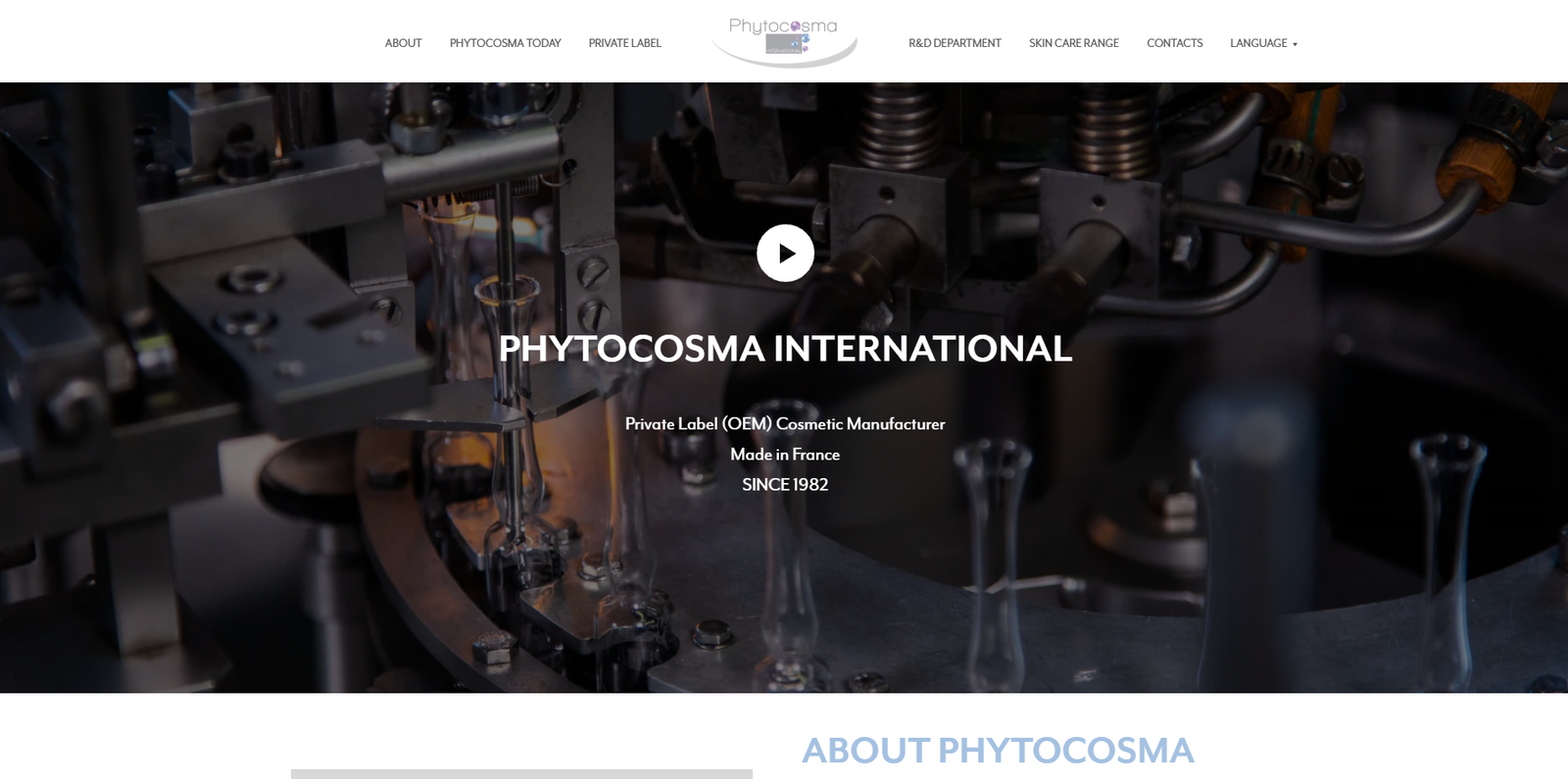
When a private label face serum has to stay potent until the last drop, the glass-ampoule format is the first thing I ask Phytocosma International about. The Chassieu site near Lyon runs more than 2,400 formulations and scales from laboratory pilot batches up to full ton-scale production under GMP and NF EN ISO 22716. Single-dose ampoules keep an oxygen-sensitive active sealed until the moment of use, which is the physical answer to the degradation most serums fight once the bottle is opened. That mix of a fragile-active specialty and industrial capacity is what puts them first, and it is the standard I held the other face serum manufacturers to in earlier research.
Factory Profile
- An ampoule specialist since its founding, the house has stayed narrow on format while rivals widened into full ranges.
- Filling lines are specified for oxygen-sensitive actives that break down in open systems.
- In-house regulatory support covers EU export and CPNP notification for brands selling across the bloc.
Core Competencies
- One supplier carries the formula from bench sample to bulk, so the product stays identical at every scale.
- The single-dose format ships as a finished, shelf-ready unit for brands that want minimal line extensions.
2. Lessonia
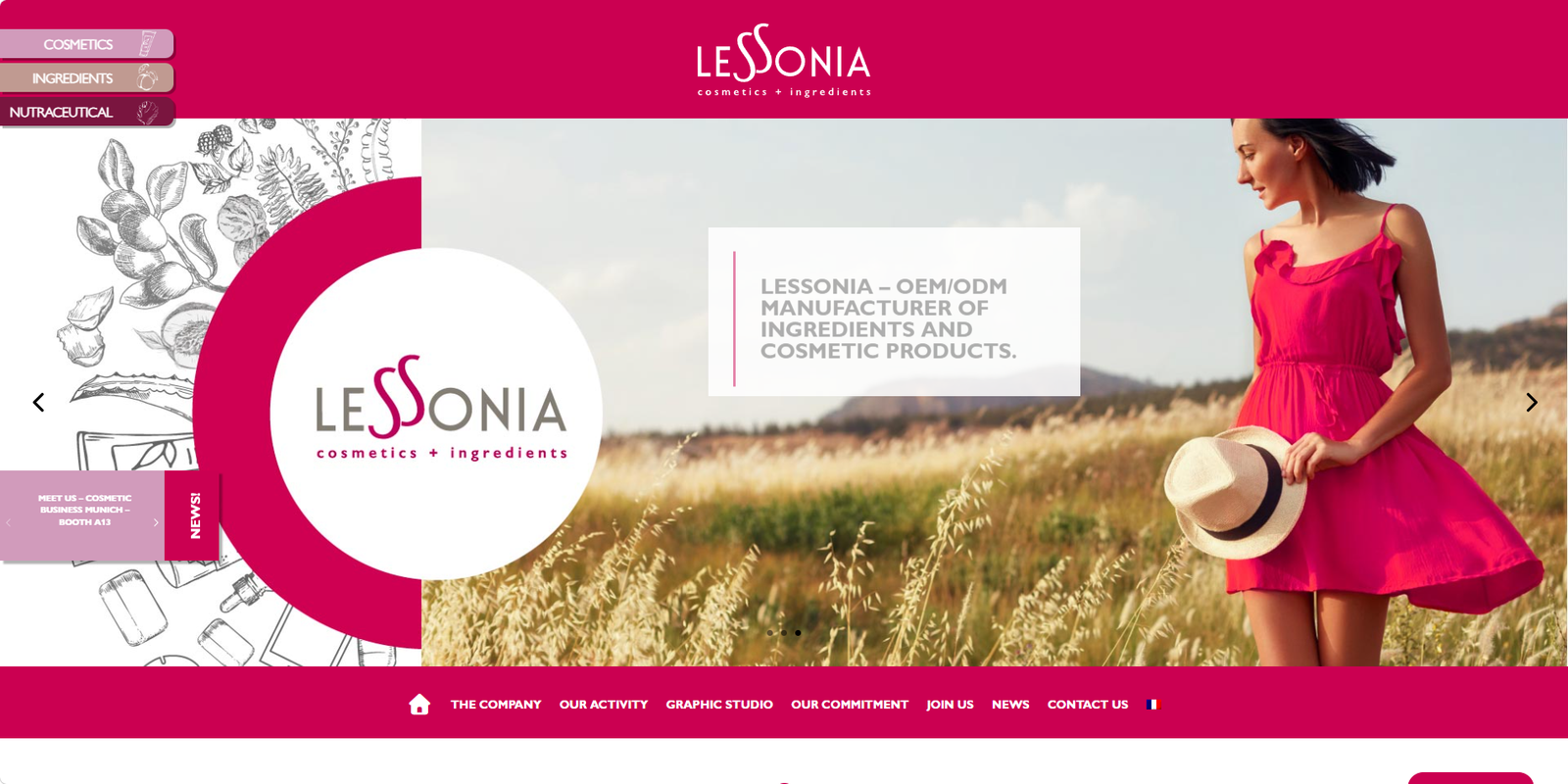
Lessonia ships 100% Made-in-France skincare and treats a private label face serum as a formulation problem rather than a filling job, which is the difference I look for in Brittany. Their vitamin C powder format rebuilds the serum fresh at the point of use, and the plant keeps the idea and the volume under one roof. Vitamin C is the ingredient that makes this hard: a peer-reviewed study in the International Journal of Cosmetic Science shows how much work goes into holding a 12% vitamin C serum stable at skin-friendly pH, and a buffered, polymer-stabilised system is one answer to that. A powder dissolved at use is another answer to the same problem, which is the comparison I would put to the house in a briefing call.
Factory Profile
- Founded in Brittany, the house grew on marine and natural active expertise before moving into serums.
- Export and private-label documentation are handled in French, which speeds EU brand onboarding.
- Sixteen filling lines include eight reserved for masks, which leaves serum capacity free.
Core Competencies
- Vacuum mixers from 25 litres to two tonnes let a trial and a launch share one validated process.
- Brittany’s coastal location keeps logistics short for brands shipping into the EU’s western markets.
3. Laboratoires BEA
Laboratoires BEA puts facial serums on the label alongside toners and makeup removers, and the reason I keep them on a private label face serum shortlist is the development timeline they publish. Their Forcalquier operation quotes six to twelve months from brief to a personalised formula, and its mixers run up to five tonnes for bulk production. For a buyer planning a launch window, a stated lead time beats a sales-deck promise.
Factory Profile
- The plant has carried skincare, suncare and dermocosmetics briefs for decades under one roof in Provence.
- Cosmos-certified and conventional formula routes run side by side, so a claim and a budget both have a path.
- Stability and challenge testing are run before a formula is released to bulk production.
Core Competencies
- A published timeline lets a buyer hold the house to dates, not just a promise on a slide.
- Small pilot runs let a new brand trial a facial serum before committing to a full launch.
4. Skinlys
Custom actives are where Skinlys earns its place on my shortlist for a private label face serum, because two R&D laboratories keep a brief moving instead of stalling. The Lamonzie-Saint-Martin team frames serums and eye products as premium custom work under ISO 22716, and around ten new prototypes leave the bench every week—a cadence that matters when the active is still an idea. For a buyer, that depth is what turns a vague brief into a bottle I can put my name behind.
Factory Profile
- Founded in 2013, the house concentrates on skincare and makeup-care custom projects rather than catalogue fills.
- Roughly 75 staff keep formulation and testing on the same floor as production, so a custom brief stays with the people developing it.
- On-site laboratories take a prototype from first sample to bulk, so the formula that samples well is the one that ships.
Core Competencies
- Serums and eye products are named as core strengths, not afterthoughts on a long menu.
- A business this size still answers questions directly, rather than routing them through a group.
5. TECHNATURE
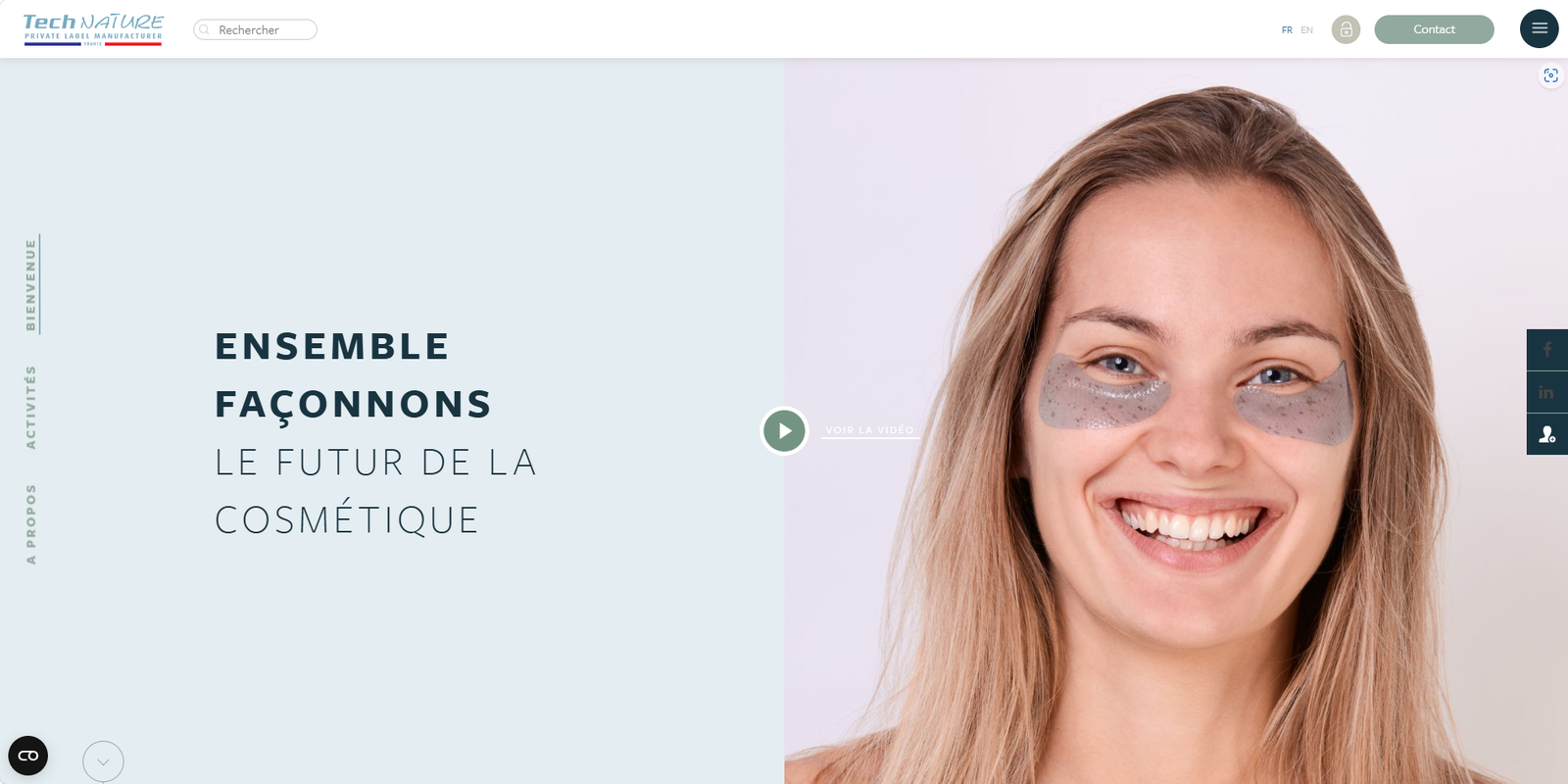
A texture-led private label face serum, rather than a thin fluid, is where TECHNATURE comes in—its in-house hydrogel capability runs across three Brittany sites. The Brest plant makes creams, gels, serums and hydrogel masks under B Corp and Ecocert credentials, and 200 staff spread over those sites is the scale signal I trust more than a revenue line. For a brand testing a texture claim, that is a rare combination of format novelty and scale, and it is the kind of house I keep on the shortlist for texture-led briefs.
Factory Profile
- Brittany-based production across several sites gives the group redundancy that a single-plant house cannot match.
- In-house hydrogel production is rare in Europe, which is what sets the serum and mask formats apart.
- B Corp status and Ecocert, Vegan, Natrue and Halal credentials cover most certifiable positioning a brand might want.
Core Competencies
- Three production sites put a hydrogel launch on a footing that can grow with the brand.
- A texture-led format is the angle I point brands to when a standard fluid will not carry the claim.
6. ALPOL Cosmétique
ALPOL Cosmétique has formulated dermocosmetics since 1947, and the private label face serum brief I send them lands inside a house that already manages more than 1,000 development projects a year. Their Château-Gaillard plant turns out over 1,000 tonnes of finished cosmetics annually across 250-plus catalog formulas, and because the work happens inside the EU, every ingredient is checked against the Commission’s CosIng ingredient database for its regulatory status before the formula is signed off. For a buyer, that scale plus regulatory proximity is what separates a contract filler from a development partner.
Factory Profile
- The group is a family-owned cosmetics manufacturer rather than a recent entrant, which shows in how it treats a long-term brief.
- A proven pipeline means a new brief joins established workflows instead of starting from scratch.
- A quality system with full traceability runs from raw material through finished goods.
Core Competencies
- A high annual output means a facial serum can scale from pilot to volume without a second plant.
- The Château-Gaillard site near Lyon keeps formulation and filling on one address.
7. Fareva
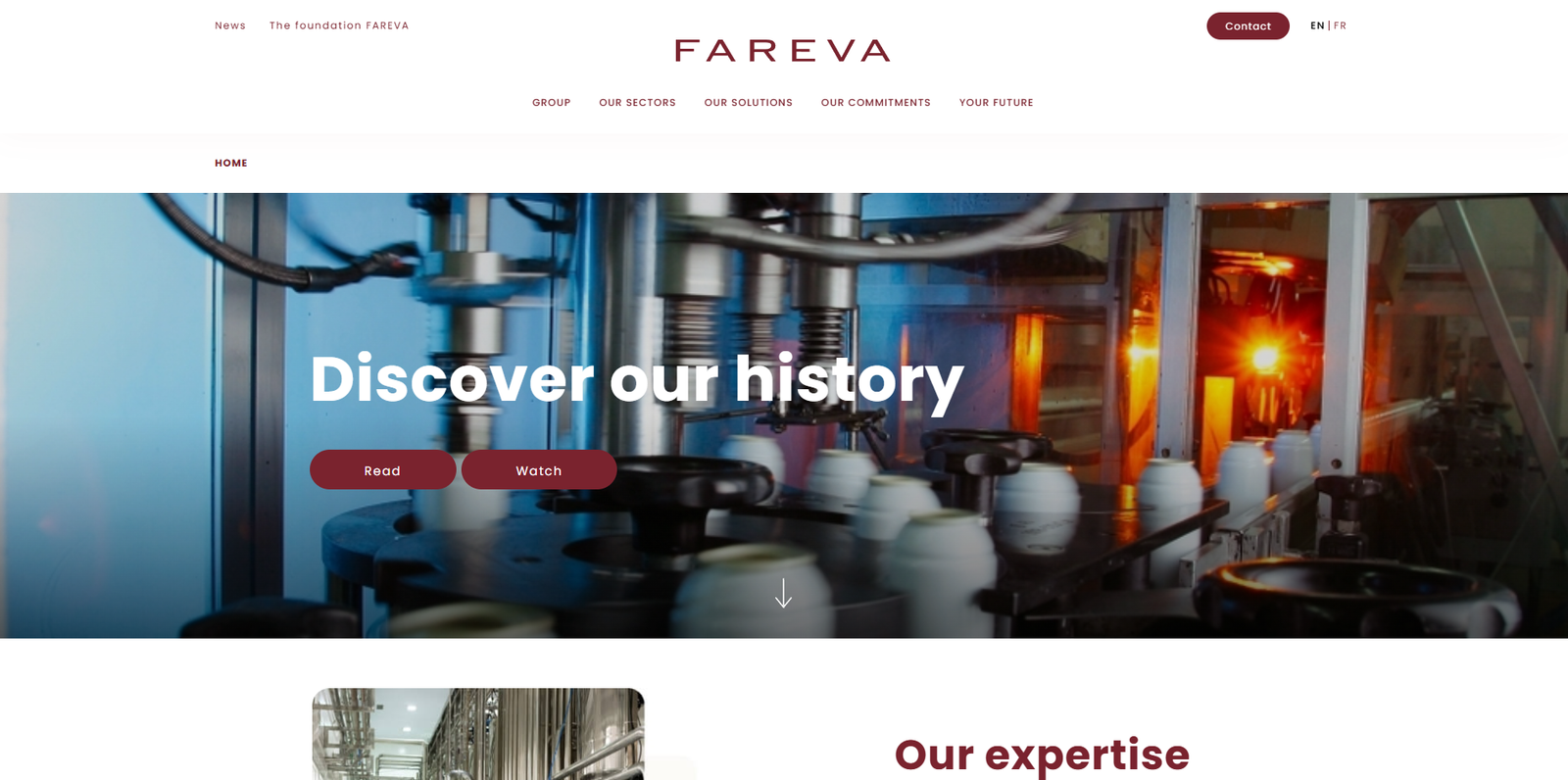
Volume is what puts Fareva on my list for a private label face serum, because its Beauty division lists facial skincare and cleansers among 400-plus portfolio formulas. The Tournon-sur-Rhône group runs 42 sites and 13,000 staff worldwide, carrying ISO 22716, Ecocert, Cosmos, cGMP and FDA credentials that a large retailer’s audit team will recognise. When the question is volume and compliance at once, few houses answer it like this one.
Factory Profile
- The Beauty division is one of several at the group, so a serum brief joins an existing personal-care line rather than standing alone.
- Sites across several continents mean a brand can place volume close to its own markets.
- The credential base clears most retailer audits on its own, so a new brand reaches shelf without schooling the auditor.
Core Competencies
- A broad portfolio means a serum can sit beside cleansers and creams in one contract, simplifying a launch.
- For a brand moving from pilot to national distribution, the global footprint removes the capacity ceiling.
8. Laboratoire Orescience
White-label, OEM and ODM under one roof is what Laboratoire Orescience offers, and for a private label face serum that starts as a vague brief, their full-service model is what I lean on. Once a formula is finalised and stability-tested, the house quotes a manufacturing lead time of about six to eight weeks, and its line takes a first launch as readily as a repeat order. For a first-time brand, that ecosystem is often the safest place to learn the category.
Factory Profile
- Gennevilliers, near Paris, keeps formulation, filling and regulatory filing under one roof, so a first-time brand works with one team.
- GMP certification comes from a house that is also a Cosmetic Valley and FEBEA member.
- Dermocosmetic and facial care projects are named areas, not a side line of the business.
Core Competencies
- A vague brief does not need three vendors, since development, filling and packaging stay internal.
- The regulatory network around the plant is the reason I point first-time brands here.
Summary
A private label face serum is only as good as the stability work behind the active and the plant that scales it, which is why the shortlist above favours houses with a real formulation discipline over those that only fill bottles. The contract market rewards buyers who ask for a stated lead time, a sample path and a capacity figure before signing, because those three facts separate a partner from a placeholder. When the brief is ready, our team can take it from there—we run our own formulation and filling, so the next step is your formula rather than a referral.
